

Group Therapy Ideas, Topics And Activities to Keep Teens Engaged
Group therapy activities for teens have to be clever, engaging, and appeal to their sense of what might be cool to do. Activities that are overly therapeutic may work in adult settings, but teens are often far more discerning. What can clinicians do to foster a supportive environment with fun games and topics?
Sessions (and group therapy activities for teens) can be divided into several main categories, depending on what would benefit members the most.
Effective support for teens helps promote communication skills through active listening and peer support, utilizing role-playing and social games. Teens can also learn through creative expression with arts and crafts. New coping skills, such as meditation and progressive muscle relaxation, also play a key role.
Artemis Adolescent Healing Center offers support to teens and their families through comprehensive group therapy activities tailored to their developmental stage. Here is just a small sampling of ideas that could benefit adolescents dealing with mental health issues.
Get Accredited Treatment Programs at Artemis
Teen Group Therapy Activities for Effective Communication
For some teens, the key to unlocking their inner world is teaching them how to improve communication skills with their parents, peers, and even their clinicians. As they practice sharing with the other group members, they suddenly learn new vocabulary to put words to their experience.
Candy and Emotional Awareness Group Discussions
What group of teens doesn’t want to dive into a big bowl of sugar-filled candy? Bring in a bowl of sweet treats that will be tempting to your audience. Guide teens to select two or three pieces of their choice, but advise them not to eat them right away. The colors of the wrappers will guide the discussion.
Each color wrapper represents different emotions, and you can switch this up from game to game to keep more experienced players on their toes. Red wrappers can signify anger, yellow wrappers can signify happiness, and so on.
As players take turns eating their candy, they must talk about a time when they felt that emotion and how they handled it. This is also a time for reflection on how they could have handled it better.
Charades for Communication Skills

In addition to learning how to talk about feelings, it’s also important for teens to learn what each of the emotions they experience looks like. Body language and body awareness are important in helping teens heal and facilitate open dialogue with their peers.
Charades gives teens a means of creative expression where they can be silly and work together with peer support to identify patterns in behavior. What does it look like to be angry? What does it look like to be sad? Narrowing down the communication skills to a silent action can distill the essence of what emotions feel like for teens.
Compliments for Classmates
One of the main issues for clinicians who work in teens’ group therapy is low self-esteem. Many kids between the ages of twelve and seventeen no longer feel sure about themselves or their place in the world. A few strategic compliments can go a long way.
Have the group draw names out of a hat to see who they need to compliment. Alternatively, they can give compliments to the person on their right or left, if seated in a circle. Compliments can be given anonymously through paper slips submitted to the therapist, but direct communication skills are ideal.
This can be a great way to transition to games that build trust among the group, like obstacle courses.
Role-Playing to Encourage Active Listening Skills
Does one of your group members have a difficult conversation coming up? Maybe they wish they had the opportunity to handle past experiences differently. Role-playing is a great way to give them the opportunity to practice their new coping strategies in a real-life situation.
If you can think of universal situations that all teens will face outside of therapy, consider providing them with a worksheet featuring scenarios. They can pair up or work in small groups to act out their chosen situation while you walk around the room and offer assistance if needed.
They can say what they wish they had said, which can be quite cathartic. Keep in mind that these are often emotionally-charged situations, so use them only when there’s a supportive environment among the group members.
Incorporate Music Therapy into the Discussion
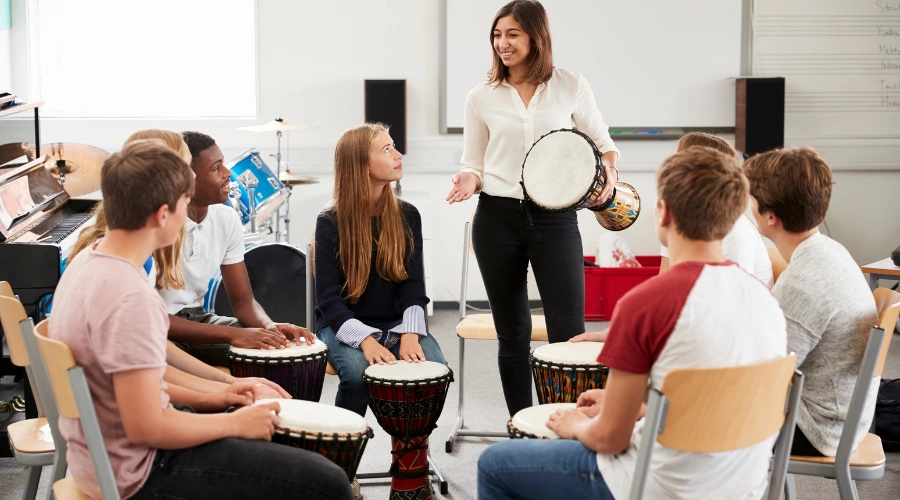
Is there any teenager struggling with substance abuse or mental health who doesn’t connect with music of some kind? Allow kids the freedom to choose a song that represents their current mood or situation, using your best judgment.
Play the song for the group and allow everyone to get the gist of the song and enjoy the music. Then, ask teens to explain why they chose that song and how it relates to their experience.
Two Truths and a Lie
Social skills often take quite a hit when mental health issues begin to surface. When someone has a hard time with their communication skills and cooperating with their peers, then this game can be a great conversation starter for the group. It’s also ideal for new groups that need buy-in from each of the members.
Each person in the group has a chance to offer three statements. Two are true, and one is a lie. The rest of the group must work together to discern which statement is the lie.
This encourages people to talk to each other and try to understand their peers. Just make sure that all participants keep things age-appropriate and uplifting.
Get Effective Detox and Rehab Options at Artemis
Teen Therapy Group Activities for Creative Expression
One of the primary goals of group therapy activities for teens is to teach them new coping skills that they can apply when they leave the therapy room and return to their daily lives. Social skills will take them far, but mental health professionals need to teach teens how to manage their own emotions.
Some of these activities for creative expression will foster group cohesion while teaching new skills simultaneously.
Gratitude Journaling for Self-Awareness
When teens are overwhelmed by negative thoughts or difficult emotions, it can be hard to see any of the silver linings in their lives. This gratitude activity prompts them to reflect on the positive aspects of their lives, whether that involves the people in their lives or their own self-perception.
Give each teen a blank worksheet with a box for them to draw, color, and decorate a picture of what they are grateful for. The bottom of the worksheet should leave space for a short journaling exercise about why they are grateful for that person, item, or attribute.
This teaches kids not only how to tap into their creativity but also how to use words to communicate effectively.
Make a Mandala
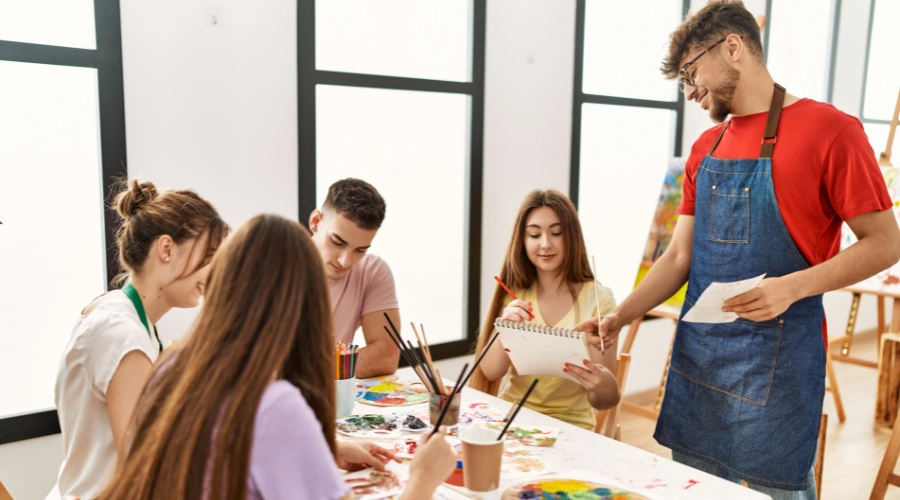
Doodling can be a great coping skill that teens can do anywhere. It doesn’t necessarily scream that it’s a coping mechanism for depression, anxiety, or substance use, allowing them to practice in class if they need to. Mandalas are relaxing and intricate, which takes the focus off difficult feelings for a while.
Provide them with a variety of colored pencils, markers, and other art supplies to create a flow state where they can simply draw. It’s a great method to teach mindfulness to teens who may be resistant to other group therapy activities.
Additionally, they can color them in afterward, which provides a long and fruitful opportunity for them to take a break from their emotions as they build up more tolerance and emotional awareness.
Creating a Collage for Their Future Self
Chances are that you have done some version of a future self exercise with your group members. In many versions of this exercise, the group will write a letter from a future self to their present moment selves, telling them how much better life is on the other side of this challenge. It is an immediate and tangible way of supporting positive self perception.
A creative twist on this exercise is to create a collage to be sent to their future self. How will their life change when they transition out of rehab? What will their world be like when they overcome this issue?
They can draw pictures, clip pictures from magazines, paint, color, or any other method of creativity that you might have on hand. All you have to do is set up a supportive environment that encourages their personal growth, allowing them to start considering what the future holds for them.
Drawing Together with the Group
If you want to teach creativity in a more cooperative setting, then you might want to encourage your group to draw together. Set a timer and let the first person draw for thirty seconds. The paper then gets passed to the next person, who adds to the drawing during their allotted time. The paper goes around the entire circle, with each person contributing to the drawing.
This allows your group to exercise their creative muscles, think and analyze a problem, and laugh with their peers about how silly things turn out to be. Cooperative drawing can serve as an icebreaker with new groups or when new members are added to the fold.
Group art projects of all kinds can help with emotional expression and can allow teens to share some of their personal values in a non-threatening way.
Group Therapy Activities for Teens: Teaching New Coping Skills for Emotional Regulation

Creativity unlocks the door to a flood of emotions that might enter for the first time in a while. Group therapy activities for teens sessions must also teach young people how to manage this emotional surge, which extends beyond simple self-care strategies like bubble baths and healthy snacks.
Here are a few ways you can teach coping strategies alongside mental health issues.
Recording of Progressive Muscle Relaxation Techniques
In advance of one of your sessions, take ten to fifteen minutes to either record or locate a recording of a progressive muscle relaxation exercise. These recordings are great, as they provide healthy coping skills that teens can still access after group therapy ends, by sharing them via email or on a flash drive.
Stress management techniques that take teens out of their heads and get them into their bodies are great for teaching them to recognize the physical sensations associated with emotions. This is a skill that traditional talk therapy often overlooks or doesn’t have time to address.
Now, teens can practice this at any time with access to YouTube where recordings are abundant.
Deep Breathing Exercises with Square Breathing and More
Dialectical behavior therapy activities for teens often focus on teaching them how to use their bodies to manage intense emotions. Breathing exercises are one of the best ways to recalibrate, but how do you know which ones to teach?
A simple handout that lists a selection of deep breathing exercises, such as square breathing, 4-7-8 breathing, and belly breathing, provides a buffet of choices for teens to experiment with. They get to sample five to ten exercises all at once and decide which ones work best for their brains.
Plus, the handout ensures that they’ll never forget all of the options available to them. When one method fails, they might turn to another because they found these coping strategies helpful.
Balloon Popping
If you have a group that doesn’t mind getting a little loud, give each teen a balloon. Allow them to draw or write their difficult feelings onto the balloon. This allows them to visualize their challenges and gives them something tangible to hold on to. Then, they can go around the room and share what they want to from their balloon.
At the end of their turn, allow group members to get creative with how to pop them. This can give them a release of emotions and grant them a way to visualize letting go of those negative feelings.
Meditation for Self-Awareness
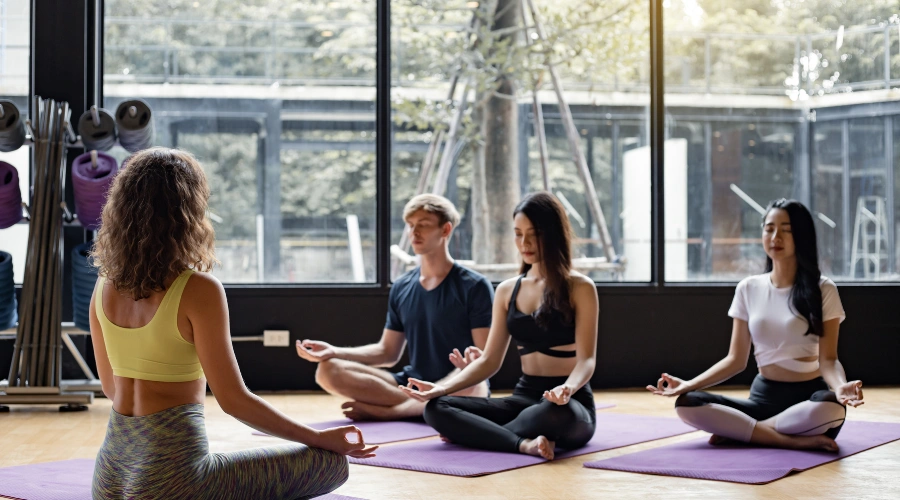
Sometimes, teens need a safe space where they can internalize their feelings. While active listening exercises can be great for group cohesion, meditation allows them to drop into their bodies and minds without pressure to share what’s going on with other group members.
This is an ideal opportunity to create a handout featuring several guided meditation scripts. Teens can record the scripts on their own phones or using an old-fashioned recorder. Then, they can close their eyes, sit back, and listen to their own voice guiding them through relaxation techniques.
You can read to the group, but it’s often more fun for teens to get involved in the creation of the audio.
Up To 100% of Rehab Costs Covered By Insurance
Find Effective Group Therapy for Teens at Artemis Adolescent Healing Center
If you think that your teen could benefit from some of these group therapy sessions, then it might be time to consider treatment at Artemis Adolescent Healing Center. Our treatment team offers your teen comprehensive and individualized treatment programs based on their developmental and mental health needs.
We’ll use some of these group therapy activities to facilitate personal growth so that they can return to their family members, schools, and communities with stronger communication and coping skills. Teens can enroll in all levels of treatment, ranging from residential to intensive outpatient, based on their individual needs.
Contact us today to learn more about our programs and how we can support teens during a challenging time. All calls are strictly confidential, so please reach out for options and assistance now.
References
- Jackson, V. A., & Back, A. L. (2011). Teaching communication skills using role-play: an experience-based guide for educators. Journal of palliative medicine, 14(6), 775–780.
- Ghetti, C., Chen, X. J., Brenner, A. K., Hakvoort, L. G., Lien, L., Fachner, J., & Gold, C. (2022). Music therapy for people with substance use disorders. The Cochrane database of systematic reviews, 5(5), CD012576.
- Krentzman A. R. (2017). Gratitude, abstinence, and alcohol use disorders: Report of a preliminary finding. Journal of substance abuse treatment, 78, 30–36.
- Toussaint, L., Nguyen, Q. A., Roettger, C., Dixon, K., Offenbächer, M., Kohls, N., Hirsch, J., & Sirois, F. (2021). Effectiveness of Progressive Muscle Relaxation, Deep Breathing, and Guided Imagery in Promoting Psychological and Physiological States of Relaxation. Evidence-based complementary and alternative medicine : eCAM, 2021, 5924040.
- Tavoian, D., & Craighead, D. H. (2023). Deep breathing exercise at work: Potential applications and impact. Frontiers in physiology, 14, 1040091. https://doi.org/10.3389/fphys.2023.1040091 Jamil, A., Gutlapalli, S. D., Ali, M., Oble, M. J. P., Sonia, S. N., George, S., Shahi, S. R., Ali, Z., Abaza, A., & Mohammed, L. (2023). Meditation and Its Mental and Physical Health Benefits in 2023. Cureus, 15(6), e40650. https://doi.org/10.7759/cureus.40650