


Clinically reviewed by: Laura Tyndall
Clinical review completed: July 15, 2026
A Sampling of Our Favorite Mindful Games, Activities and Exercises to Support Teenagers
Mindfulness is an important life skill. It involves focusing on the present moment. Learning how to use mindfulness sets teens up for success in more than one way. It can help you make good decisions, communicate effectively, and self-soothe.
Another advantage of mindfulness? It’s cost-effective.
Once teens learn mindfulness techniques, they can apply them to their daily lives. With these benefits in mind, what are some effective and engaging mindfulness activities for teens?
Artemis Adolescent Healing Center uses mindfulness interventions in our programs. This helps teens develop healthier coping mechanisms, gain emotional insight, and handle daily life stressors.
Let’s go over 11 kinds of mindfulness activities for teens and how to use them.
Find Accredited Adolescent Treatment Support at Artemis
11 Mindfulness Activities for Teens – Games, Activities, and Exercises to Try
Here are 11 ways teens can start practicing mindfulness now.
1. Breathing Meditation & Techniques
Breathing exercises are popular for a reason. They’re free, and you can use them anywhere. Better yet, they’re an effective way to reduce stress and anxiety.[1]
Here are a few mindful breathing techniques to try.
- Extended exhale breathing.
- Slow breathing with pauses and holds.
- Box breathing. A repeated cycle of inhaling for four seconds, holding your breath for four seconds, releasing your breath over the course of four seconds, and holding the exhale for four seconds before starting again.
- Deep belly breathing.
Mindful breathing can be simple. Take deep breaths. Inhale and exhale slowly. Some use YouTube videos or mindfulness apps to guide them through breathing exercises.
2. Naming & Observing Emotions Without Judgement
It can be tempting to tell yourself how you think you ‘should’ or ‘shouldn’t’ feel. However, being able to name what you feel without criticism can be critical for self-awareness. This exercise is straightforward. Using radical acceptance, acknowledge your emotions:
- ‘I am sad.’
- ‘I am angry.’
- ‘I am nervous.’
Then, you can take steps toward emotion regulation. If you’re angry, for example, identifying that you feel this way means you can use healthy coping skills. You’re less likely to push it away, and it’s less likely to get the best of you.
3. Mindful Listening Exercises
Mindful listening encourages nonjudgmental awareness of sounds. Meaning, it’s not so much about whether you like or dislike what you hear. To use mindful listening, teens can:
- Observe naturally occurring sounds. If you’re at home, you might notice the sound of grass being cut outside, the clock ticking, or cars driving by.
- Listen to music. Really focus on the sounds in the song. Concentrate on identifying each instrument and the moments when it gets louder or quieter.
- Paying close attention to white noise and other pre-recorded soothing sounds (e.g., trains moving, bird sounds).
Active listening is another way to practice mindfulness. Doubling as a crucial communication skill, active listening means intentionally focusing on, understanding, and responding to others.
4. Mindful Writing Practices

Mindful writing practices are free or nearly free. Helpful mindful writing exercises for teens and adolescents include:
- Gratitude journaling. Writing about things you’re grateful for. Many people use bullet point lists, taking about five minutes per day to jot down what they’re grateful for in relation to that specific day (e.g., a nice breakfast, a nature walk, seeing a friend). Even better, gratitude is associated with mental health benefits like a reduction in depression and anxiety symptoms.[2]
- Short mindful writing sessions for emotional shifts. Sit down to journal when your emotions change or intensify. Write about how you feel. Be candid. Let it be your safe space.
- Habit tracking. Frequently encouraged in therapy, habit tracking involves committing to certain habits (e.g., meditating, stretching, not using your phone before bed) and checking them off daily. Some add notes about how these habits make them feel to aid motivation.
- Mood tracking. Mood tracking entails keeping a daily record of your mood and emotions. Ideally, include any factors (e.g., lack of sleep) that may have affected your mood. You can use this information later to see what helps and what hurts.
What if you’re stuck? Try journaling prompts for mindfulness. Look for one that speaks to you. They can be found online or in guided mindfulness journals.
5. ‘Classic’ Grounding Techniques
Grounding techniques calm the nervous system. They help people alleviate stress and feelings of anxiety. Many mindfulness activities double as grounding techniques. But here are some well-known go-tos.
- Visualization. Close your eyes and visualize a happy, relaxing place or scenario. For example, picture yourself on the beach. Focus on all of the soothing sights and sounds you imagine.
- 5-4-3-2-1 grounding exercise. Identify five things you can see, four you can feel, three you can hear, two you can smell, and one you can taste.
- Phrases and affirmations. Ground yourself through mantras like “I am safe.”
- Counting backwards from 100.
Like breathing exercises, these grounding techniques are discreet. Many teens find exercises like these valuable. They can be used to promote a better emotional state in diverse situations.
6. Sensory Tools & Exercises

Sensory tools and exercises involve anchoring present moment awareness through touch, sight, sound, and movement. For example:
- Use fidget spinners, stress balls, or ‘pop its.’ Pay close attention to how they feel in your hands and any sounds they make as you use them.
- Play with putty. Notice how it feels, stretches, and smells.
- Scents (e.g., smelling candles, aroma therapy).
You can use almost any item nearby to cultivate mindfulness in a pinch. You might even pick up a pen, mug, coin, or water bottle. Focus on how it feels and what it looks like.
7. Art and Creative Mindfulness Activities
Creative activities are a natural opportunity to apply mindfulness. You can use nearly any creative activity as a chance to concentrate on physical sensations (e.g., smells, touch, sight, the amount of pressure you put on a pen or pencil). Here are some ideas.
- Mindful doodling.
- Mindfulness coloring books for teens.
- Connecting breathwork to art. Draw what you envision your breathing pattern would ‘look like.’
- Make an item of your choice with clay. Pay close attention to how the clay feels in your hands as you use it.
- Stippling/dot art.
- Jewelry making.
- Collages.
Creative arts are known to support mental health in daily life.[3] Of course, they provide an excellent opportunity for self-expression. Art can also relieve stress, help people connect with each other, and promote attentiveness, among other benefits.
8. Use Games to Support Mindfulness
Games make teaching teens mindfulness fun. Easy to find games that can be adapted or used to support mindfulness include:
- I-Spy.
- Puzzles.
- Word games.
- Memory games.
- Stone stacking.
- Jenga.
Games aid mindfulness because they require your attention, patience, and presence. An added bonus? Playing games as a family can also facilitate parent-child bonding.
9. Mindful Movement Activities for Teens
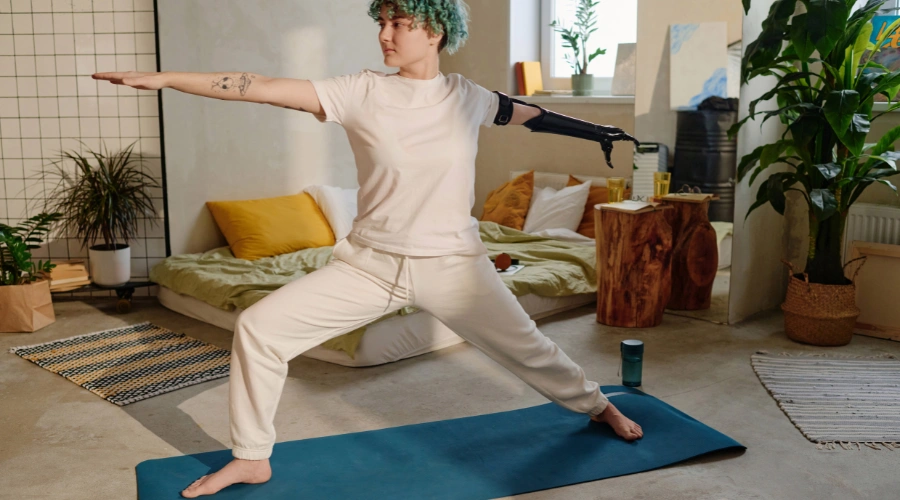
Mindful movement activities can take many different forms. Similar to art, physical activity tends to provide natural mindfulness opportunities. If suitable, teens might try:
- Tension and release. Tightening and relaxing your muscle groups, one by one. Following a guide for progressive muscle relaxation is a great way to learn how to do this.
- Mindful walking. While taking a talk, notice all of the sounds and sights around you. Pay attention to how your body feels.
- Balancing. Balance on one foot. Or, use a tool like a BOSU (both sides up) ball.
- Shaking your arms by your sides.
- Jogging in place.
- Jumping jacks.
- Swimming.
- Stretching.
- Yoga.
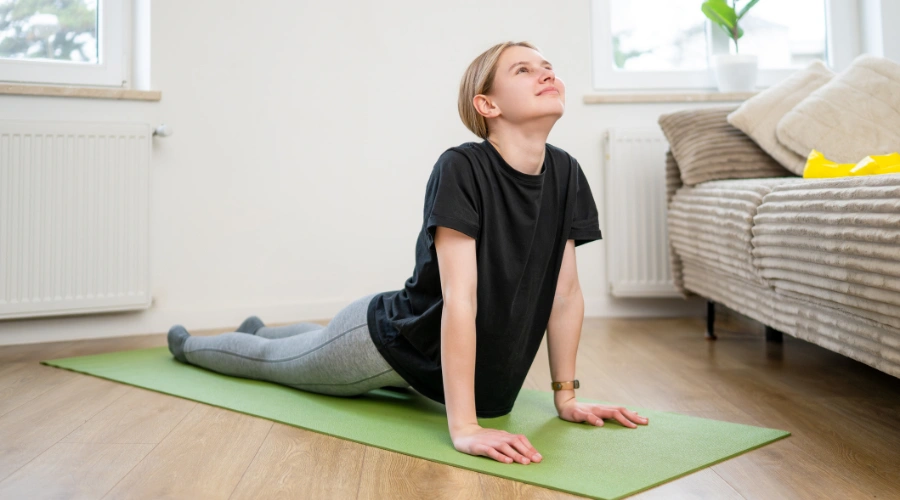
Mindful movement is great for body awareness. Body awareness involves paying attention to physical sensations. It supports the mind-body connection and can help you tune into your health needs. For example, if you notice muscle tension, you can address it.
10. Body Scan Meditation
Body scan meditation is a very popular mindfulness technique. Follow these steps to complete a body scan meditation.
- Find a comfortable position. Many lie down or sit in a chair.
- Settle in and breathe deeply. Close your eyes. Take a few deep, slow breaths to anchor yourself to the present moment.
- Starting from your head to your toes (or vice versa), pay attention to how your body feels. Spend about 20-30 seconds on each body part (e.g., head, jaw, ears, neck, shoulders, arms).
As you move through the scan, observe how each part of your body feels without judgment. Tense? Warm? Cold? Like movement-based activities, this is a solid mindfulness practice for body awareness.
11. Cognitive Reframing: A Helpful Way to Reframe Thoughts
Commonly taught in cognitive behavioral therapy (CBT), cognitive reframing requires mindfulness. It involves three main steps:
- Awareness. Recognizing or ‘catching’ negative thoughts or distorted thinking patterns.
- Challenging. Ask yourself if the thought is accurate, helpful, or rational.
- Reframing. Modifying negative thoughts to be more helpful and realistic. For example, challenging the thought ‘no one there will like me’ with ‘I can’t know that they won’t like me for sure because I haven’t met them yet.’
Cognitive reframing is important for emotional regulation. But it can also support other essential skills. For example, problem-solving.
How Artemis Adolescent Healing Center Uses Mindfulness Activities for Teens as a Component of Treatment
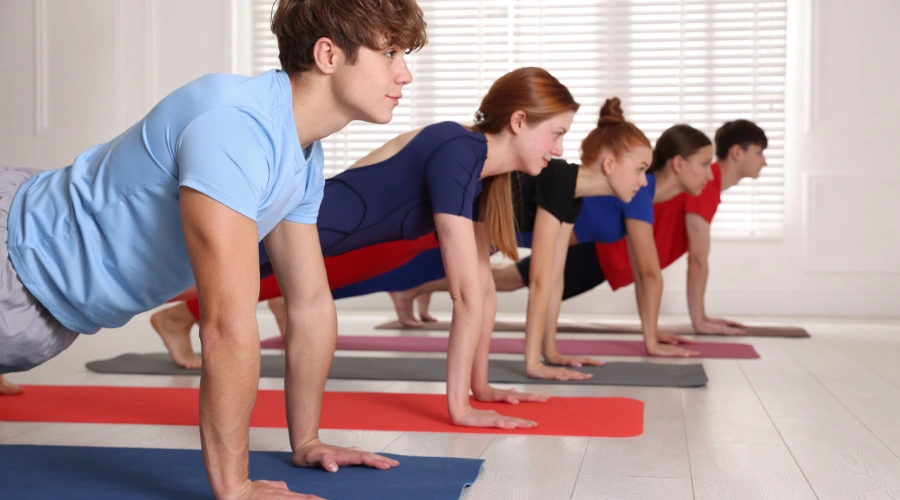
Both our residential inpatient and outpatient rehab programs teach mindfulness. Teens may work on mindfulness exercises at Artemis in groups or in individual therapy settings.
Group Mindfulness Activities
Group mindfulness activities at Artmis involve engaging in activities led by a mental health professional with peers. For example, a therapist may guide a group through mindfulness meditation or breathing exercises.
Mindfulness in Individual Counseling
Individual counseling lets your teen focus on their own unique needs privately in one-on-one sessions. This can include identifying the mindfulness activities that work for them and when to use them.
Combining Mindfulness Interventions With Other Treatments
For a comprehensive approach, we combine mindfulness interventions with other treatments. These may include, but are not limited to:
- Family therapy.
- Psychoeducation.
- Cognitive behavioral therapy (CBT).
- Dialectical behavior therapy (DBT).
- Trauma-focused therapies.
- Motivational interviewing therapy.
- Creative arts therapies.
- Adventure therapy.
All clients at Artemis always get personalized care plans. We work closely with adolescents and families to support clients in meeting their individual goals.
Incorporating Mindfulness Into Daily Life as a Teenager
Incorporating mindfulness into everyday life often involves identifying mindfulness practices or activities for specific situations. For example, using discreet techniques (like breathing exercises) when you’re overwhelmed at school.
You can also create morning and evening routines that involve mindfulness. This could mean following a guided meditation before bed. Or, committing to a few minutes of mindful stretching each morning.
Who are Adolescent Mindfulness Activities For?
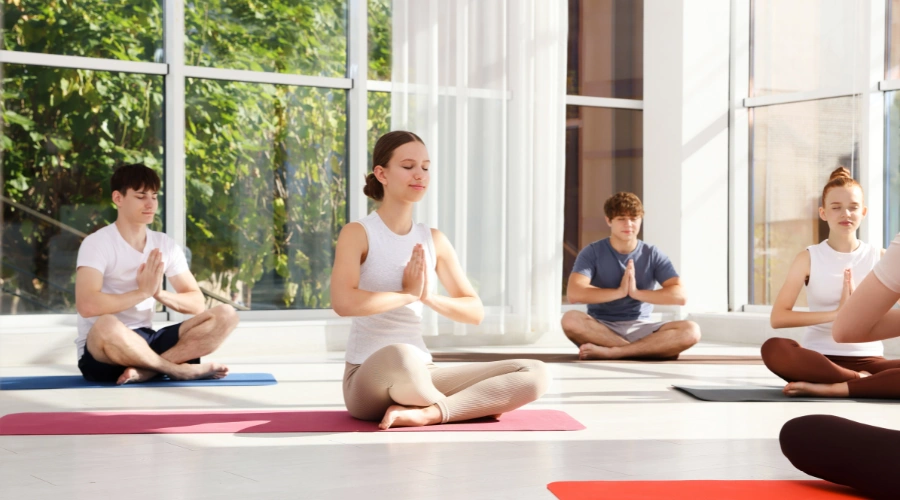
Artemis teaches teens mindfulness activities in a supportive environment. We use mindfulness-based interventions to help youth navigate the following conditions, among others:
- Anxiety disorders.
- Life transitions and adjustments.
- Trauma treatment for PTSD and complex trauma (CPTSD).
- Mood disorders.
- Attention deficit hyperactivity disorder (ADHD).
- Sleep issues.
- Anger management and impulse control issues.
- Stress.
- Substance abuse.
- Grief.
This isn’t a comprehensive list. At the end of the day, mindfulness skills are for everyone. Incorporating mindfulness activities now helps teens build skills they can use for the rest of their lives.
Many Forms of Insurance Accepted for Treatment
Reach Out to Artemis and Learn More About How Mindfulness Can Help Your Teen
Artemis Adolescent Healing Center is a JCAHO-accredited leader in teen mental health treatment and substance abuse treatment. Our providers use a whole-person approach. By incorporating mindfulness training into programs, we help teens gain benefits such as self-regulation and emotional balance.
While at-home mindfulness resources are helpful, teens sometimes need more support, and that is okay. Whether your child needs inpatient treatment or a lower level of care, such as our intensive outpatient program, we’re here to help.
Programs at our center are covered by most insurances. We can verify your teen’s coverage in a few minutes or less.
To get in touch with our team in Tucson, call our admissions line confidentially today.
References
- Bentley, T. G. K., D’Andrea-Penna, G., Rakic, M., Arce, N., LaFaille, M., Berman, R., Cooley, K., & Sprimont, P. (2023a, November 21). Breathing practices for stress and anxiety reduction: Conceptual Framework of Implementation Guidelines based on a systematic review of the published literature. Brain sciences.
- Diniz, G., Korkes, L., Tristão, L. S., Pelegrini, R., Bellodi, P. L., & Bernardo, W. M. (2023, August 11). The effects of gratitude interventions: A systematic review and meta-analysis. Einstein (Sao Paulo, Brazil).
- How creative arts support mental health in daily life. The University of Arizona Health Sciences. (2026, February 23).