

Looking at Legal Consequences and Getting Your Child Support
You know your adolescent has been using illicit drugs, perhaps even methamphetamine. You’ve even started lying awake at night, worried about their education.
Whether it has already happened or is a potential risk, the thought races in your brain: What happens if you are caught at school with meth?
Artemis Adolescent Healing Center in Tucson, Arizona, provides alcohol and drug use treatment for teens ages 12–17. Our team is here to help your family understand the available support and discuss the next step for your teen.
If you are worried about your adolescent getting caught in possession of a controlled substance at school, whether a valid prescription drug, marijuana, methamphetamine, or other narcotics.
The laws regarding methamphetamine apply similarly to many illicit drugs in Arizona, with some differences based on how the drug is classified. In this post, we’ll discuss what happens if you are caught at school with Meth Possession.
Explore Accredited Teen Treatment at Artemis
Meth Possession and Illegal Drugs in School Zones
Arizona has strict laws about drug possession, especially within drug-free school zones. These school zones often extend a bit beyond the campus and may include nearby parks or playgrounds, and school buses.
Getting caught in possession of methamphetamine, even the smallest amount, in one of these zones automatically elevates the severity of the crime committed. The state views criminal offenses in a school zone l as a threat to all students in attendance, not just one.
As a result, Arizona law A.R.S. § 13-3411 mandates that the minimum and maximum sentences for offenses occurring on school property or within a school zone be increased by one year if convicted.
Even worse, people sentenced under this statute are ineligible for suspended sentences, probation, or release from county jail or prison time until the sentence is served or commuted under these enhanced penalties.
Under the same law, school administrators must contact the police to report a violation. Failure to do so can lead to legal consequences and disciplinary action by the state. School officials must report all drug possession incidents as a suspected crime regardless of the circumstances.
What Counts as ‘Possession’ of Meth?

Possessing meth doesn’t mean only that a teen had drugs on their person or in a backpack. The law also considers charges if drugs are found in their surroundings and they are believed to have had knowledge or control of them.
Example: ‘Jasmine’ was a high school senior caught of in possession of meth in her car, even though she was in class when the drug was discovered in the school’s parking lot. Jasmine had access to the drugs and was aware of them, but she didn’t know about possession in a school zone bringing additional penalties.
She had only enough meth for simple possession charges, less than three grams, but she was scared that the arrest and criminal penalties would mean that ASU might revoke her academic scholarship.
Legal Consequences for Drug Crimes at School
Arizona law considers meth a dangerous drug. Meth possession is usually charged as the following in terms of criminal offenses:
- First-degree felony does not apply to drug possession cases.
- Second-degree felony classification indicates a major drug offender. This charge usually indicates someone has committed manslaughter by manufacturing or distributing a controlled substance.
- Third-degree felony charges occur when the person is selling, manufacturing, or transporting meth or other drugs. This charge may also be an option for the prosecution of those who repeatedly commit the same offense.
- Fourth-degree felony charges cover most drug crimes in Arizona, including first-time possession.
- Fifth-degree felony classification does not apply in drug crime cases.
- Sixth-degree felony counts may apply to possessing drug paraphernalia and theft related to drug crime.
First-degree felony is reserved for first- and second-degree murder, and fifth-degree felony applies to fraud and domestic violence; you’ll not likely hear those terms in a discussion of possession of a controlled substance.
Future Impact of Teen Drug Use on Education or Career
A drug charge, even as a juvenile, can follow an adolescent in ways that some parents don’t fully understand. Being suspended or expelled from school disrupts their education. It can also cause a drop in GPA and missed milestones. The teen may face the possibility of losing college scholarships and financial aid opportunities because of a conviction.
What about a kid who is not college-bound? Juvenile records are not automatically sealed on their 18th birthday, especially if cases are still active. A conviction can negatively impact military service, apprenticeships, training programs, or full-time employment options.
Juvenile Versus Adult Legal Charges (Will My Child Serve Jail Time?)

The Arizona Courts usually keep minors in the juvenile system; however, prosecution can request teens 15 and older be charged as adults.
Adult charges have higher stakes; depending on the circumstances, adults with drug possession charges may face prison time. However, the Arizona Drug Courts are a possibility for first-time offenders, especially those at a young age.
Hire a Criminal Defense Lawyer
If your child has had an arrest for drug possession, the enhanced penalties can become very problematic. An attorney who fully understands Arizona criminal defense strategies and dealing with the authorities can help immensely.
A criminal defense lawyer can mean the difference between a lesser sentence, such as paying a mandatory fine or penalties, and entering treatment, versus a harsh sentence of two to eight years or more of mandatory prison time.
An attorney can also help with the process of sealing juvenile records. Applying to close these records upon adulthood requires a formal application process that can take up to five years.
How Artemis Treats Teenage Addiction
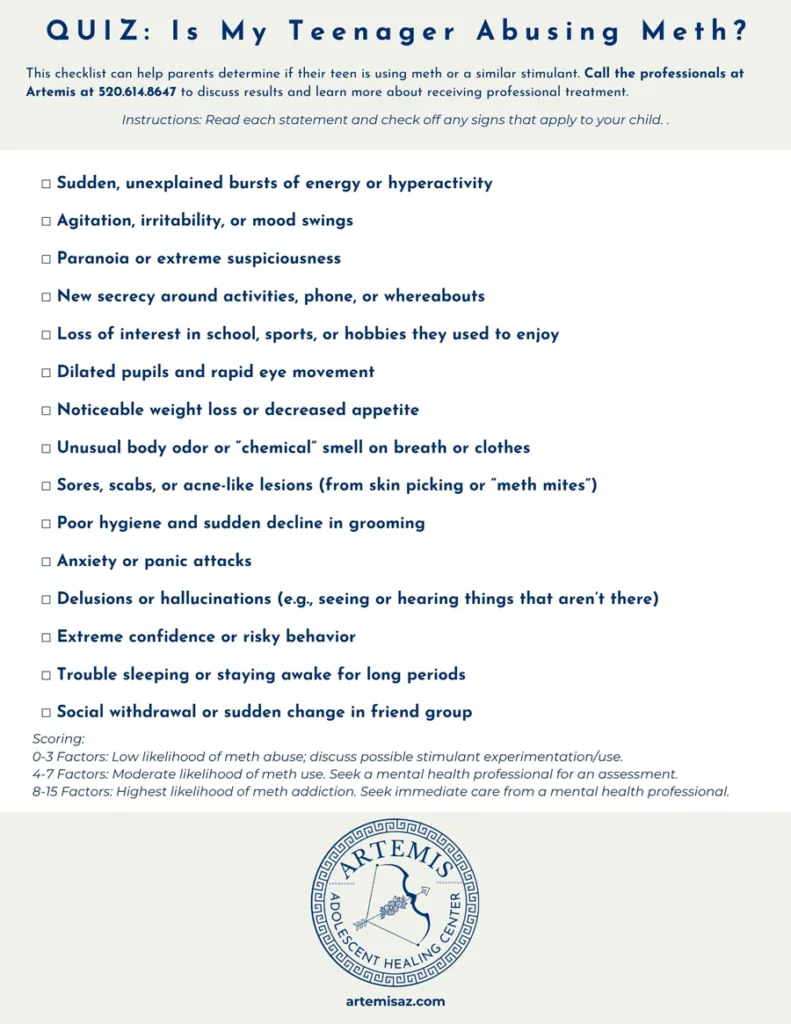
Artemis Adolescent Healing Center understands that methamphetamine use is not generally the heart of the teen’s problem. It’s usually a way to mask emotional pain, stress, or trauma, per the National Institute on Drug Abuse (NIDA).
Some clients arrive at treatment after conviction, but others come out way before the urging of their parents. Regardless of the circumstances, we are glad to help adolescents recover from substance use.
Outpatient Treatment Balances Education, Court, and Therapy
Each therapist at Artemis holds a professional license and uses evidence-based methods to help break the cycle of substance use. We are glad to work with the Arizona Drug Court system to help your juvenile heal and avoid a felony record or jail time.
When Medical Care May Be Needed First

Some teens need medical care before beginning behavioral health treatment. If you are concerned about withdrawal or your teen’s safety, call Artemis to discuss treatment options and the next step for your family.
Finding Community Support After Treatment
We also help teens reintegrate back into the community and family after therapy with a relapse prevention plan. These plans include helping the teen learn safe people and places and those who may trigger use. They also include factors like attending weekly support groups like Narcotics Anonymous or SMART Recovery.
Many Forms of Insurance Accepted for Treatment
Artemis Can Restore Your Family Life
If you fear your teen is on the pathway to a life of addiction and imprisonment, Artemis can help. Possessing meth in a school zone can mean police, court involvement, or even mandatory prison time, setting off a chain of consequences that can impact them for over a decade or more. Contact our admissions team today to hear how we can end your teen’s struggles with methamphetamine use.