

Medically Reviewed By

Dr. Roland Segal, a distinguished psychiatrist, holds the role of Medical Director and MD Psychiatrist at Artemis Adolescent Healing Center.
Accreditations & Licensing

All information shared with our team is protected under HIPAA. We will never share your personal information without your written consent.
Admissions
Accepting Admissions 24/7
Program Statistics
Drug Testing for Teens and Adolescents and When to Seek Treatment
Young adult drug use is happening at unprecedented rates. And many kids have not developed the unshakable self-confidence needed to overcome peer pressure.
Some teens also struggle with school, social relationships, or their home life, which can cause stress that contributes to adolescent substance use.
We see families struggling with these issues daily.
With so many risk factors, it’s natural to worry about what your teen is doing when you aren’t around. But is a drug test for teens a good fit for my child, you may ask. And, if they have a positive drug screen, what are the next steps?
Don’t worry – we have the answers covered. Keep reading to learn more about the pros and cons of drug testing your teen, other signs of teenage drug use, and how Artemis Adolescent Healing Center and our accredited substance abuse program for adolescents and teens can offer effective support options.
Get Accredited Teen Treatment Programs at Artemis
Should You Drug Test Your Teen?
Parents were once teenagers themselves, and this is one of the reasons they are wary of what their kids are doing when they aren’t around. They may believe that teenagers lie to stay out of trouble.
But are there any benefits of giving your teen random home drug tests if you suspect drug use?
Is A Drug Test for Teens A Good Fit for My Child?
The American Academy of Pediatrics does recommend drug testing when working closely with an addiction specialist. When paired with treatment, regular teen drug tests work as a preventive tool to discourage use.
When a counselor or parent does an at-home drug test, however, it can have negative impacts on the trusting relationship. Your teen may distance themselves from you or feel hurt by your concerns. For this reason, the American Academy of Pediatrics does not recommend that parents administer teen drug tests at home.
How Drug Testing Affects the Parent-Child Relationship
Teenagers are rebellious. Even when you encourage openness and honesty, they may not tell you the truth if you start asking questions. And, if you start accusing them of using alcohol or drugs, there’s a possibility they may do it just to spite you.
Even after your teen has tested positive for alcohol or drug use, they may feel that you do not trust them if you force them to take drug tests. A false negative test can worsen this relationship if you punish them for failing. They may even use someone else’s urine, try drugs that cannot be detected on a drug test, or use other methods to escape detection.
What You Can Do Instead of Drug Testing an Adolescent

If you are worried about your child using drugs, express your concerns to their pediatrician. Even if something else is going on, it’s worth learning what your teen is struggling with.
There are also instances where your child might need to pass a drug test for an evaluation while participating in sports or if they have legal troubles. Consulting with a professional at Artemis can help answer any questions and help you decide how to proceed.
Be Aware of the Most Common Signs of Teenage Drug Use
Being aware of the other symptoms of drug use can be useful if you suspect your teen is using alcohol or drugs. However, keep in mind that several types of mental issues and unmanaged stress can cause similar symptoms. Signs include:
- Loss of interest or hobbies
- Difficulty sleeping or sleeping too much
- Mood swings or emotional overreactions
- Increased anxiety or paranoia
- Glazed-over or red eyes
- Slurring
- Worsening grades or skipping school
- Hanging out with a new group of friends
Many parents panic about drug use without realizing that these concerns can also be related to depression, anxiety, or other mental issues. They can also result from high levels of stress. For example, your child might struggle in the weeks before they have to perform on an important test.
When you are unsure of what your teen is struggling with, reach out to Artemis and our caring staff for an intake screening and honest answers.
Are At-Home Drug Tests for Teens Considered Reliable?
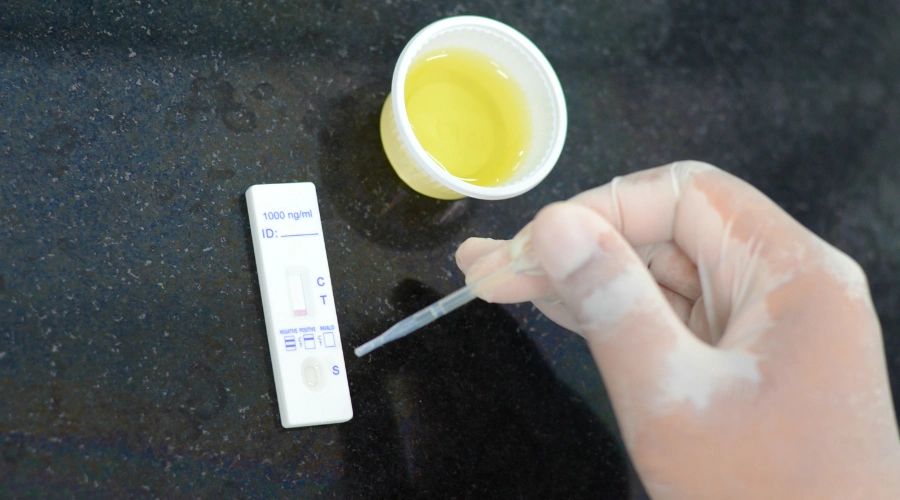
There is no way to guarantee that your teen will not participate in alcohol or drug use just because you regularly give them an at-home drug test.
And, there is a higher risk of a false positive or negative when using an at-home test. These are not as reliable as urine drug tests, saliva tests, blood tests, or hair tests from a medical professional.
Additionally, even though at-home tests do detect drugs, most are not as thorough as a medical drug screening.
For example, a 5 panel urine test might detect amphetamines or marijuana present, but it won’t detect psychedelics, alcohol, ecstasy, or inhalants. Some drugs are also only detectable for up to 72 hours after use on a urine drug test.
There is also a risk of a false positive on home drug tests. Certain medications or foods might cause a false positive, and when testing for marijuana abuse, it stays in the system so long it’s impossible to know whether your teen has quit.
Finding Accredited Substance Abuse Treatment for Teenagers
Unfortunately, 75% of high school students have admitted to using addictive substances including nicotine, alcohol, marijuana, benzodiazepines, cocaine, amphetamines, and psychedelics. Twelve percent of these teens also meet the criteria for a substance use disorder.
Even though 12% of adolescents is a lot, there are not as many high-quality addiction programs for teenagers as there are for adults.
Artemis Adolescent Healing Center provides inpatient and outpatient treatment options for teens who are struggling with alcohol use, drug use, or mental health. Following admission, your child will consult with one of our experts for a substance abuse assessment. This information will be used to craft a personalized addiction program, leading to better long-term results.
Artemis also accepts many commercial insurance plans for our teen rehab programs. We make it easier for your child to get professional help, regardless of insurance carrier.
The Elements of a Comprehensive Treatment Plan

Whether you decide that inpatient or outpatient care is best for your teen, we use a holistic approach to healing rather than stand alone treatment. Depending on your teen’s assessment and treatment plan, care at Artemis may include individual therapy, group counseling, medication management, nutritional support, and recreational therapies. Call our team to discuss the right starting point for your teen.
Through the course of treatment, your teen will work closely with a qualified mental health professional who can give them insight into the reason(s) they are struggling with alcohol or drug use. They’ll focus on finding motivations to stay clean and learn coping strategies for those times when they are at risk of relapse.
Family therapy may also be recommended. This helps teens express their needs to their parents and discuss past issues in a non-judgmental environment. Family therapy also helps you learn how to best support your teen if they are struggling with addiction or mental health issues.
By teaching skills using evidence-based programs, rather than just focusing on helping your adolescent detox, we help them lay a strong foundation for continued sobriety.
Many Forms of Insurance Accepted for Treatment
Get Support Options for Teens Using Drugs at Artemis Today
As parents, we naturally want what is best for our teenagers. Sometimes, that comes in the form of helping them seek treatment, even if they resist our help.
You can do what’s best for them by reaching out to our caring staff at Artemis. With customized treatment plans and unmatched levels of support, together we can change the path your teen has wandered down. It is never too late to get them help and turn their lives around.
Please reach out confidentially now for support options and to learn more!
References
- American Academy of Pediatrics. (2014). Testing for drugs of abuse in children and adolescents. Pediatrics, 133(6), e1798–e1807. https://doi.org/10.1542/peds.2014-0865
- Johnston, L. D., Miech, R. A., O’Malley, P. M., Bachman, J. G., Schulenberg, J. E., & Patrick, M. E. (2021). Monitoring the Future national survey results on drug use, 1975-2020: Overview, key findings on adolescent drug use. Institute for Social Research, University of Michigan. https://monitoringthefuture.org/
- Levy, S., & Knight, J. R. (2008). Screening, brief intervention, and referral to treatment for adolescents. Journal of Addiction Medicine, 2(4), 215–221. https://doi.org/10.1097/ADM.0b013e31818a8c7a
- National Institute on Drug Abuse. (2021). Drug testing. U.S. Department of Health and Human Services. https://nida.nih.gov/publications/drugfacts/drug-testing
- Substance Abuse and Mental Health Services Administration. (2020). Key substance use and mental health indicators in the United States: Results from the 2019 National Survey on Drug Use and Health (HHS Publication No. PEP20-07-01-001, NSDUH Series H-55). Center for Behavioral Health Statistics and Quality. https://www.samhsa.gov/data/
- The National Center on Addiction and Substance Abuse. (2011). Adolescent substance use: America’s #1 public health problem. https://drugfree.org/reports/adolescent-substance-use-americas-1-public-health-problem/
Authoritative source
For background on what drug tests can detect and the limitations of test results, see the National Institute on Drug Abuse overview of drug testing. NIDA overview of drug testing.