

Artemis treats teens ages 12–17 with OCD through individualized mental health care. Assessment considers intrusive thoughts, rituals, distress and daily functioning, along with other treatment needs.
The clinical team provides exposure and response prevention when indicated. Care can also include psychiatric support and family participation according to the plan. Call Admissions 24/7 to discuss assessment, levels of care and benefits.
Clinically Reviewed By

My name is Laura Tyndall, and I am a Psychiatric Nurse Practitioner & Licensed Clinical Social Worker who is proud to serve as Clinical Director at Artemis Adolescent Healing Center.
Accreditations & Licensing
 Maiden Voyage LLC · 6599 N Oracle Rd, Suite B, Tucson · PHP and IOP site record
 Maiden Voyage LLC · Tucson · Adolescent residential site record
Read our Privacy Policy to learn how information may be used or disclosed and how to contact us about privacy.
Admissions
Call Admissions 24/7
Understanding OCD in Teens
OCD involves unwanted recurring thoughts or urges and repetitive behaviors or mental rituals. These experiences can take time, cause distress and interfere with daily life. OCD is distinct from obsessive-compulsive personality disorder. Read NIMH’s OCD overview.
Artemis treats teens ages 12–17 with individualized mental health care. Assessment explores what your teen is experiencing, how it affects daily life and which supports fit their needs.
Discuss Your Teen’s Care at Artemis
Obsessive Compulsive Disorder (OCD) in Teens
OCD can interfere with school, relationships and daily routines. A teen may be distressed by unwanted thoughts or rituals they feel driven to perform.
Describe these experiences and their impact to a qualified clinician. An assessment considers the overall pattern and other possible explanations.
Common OCD Symptoms in Teenagers
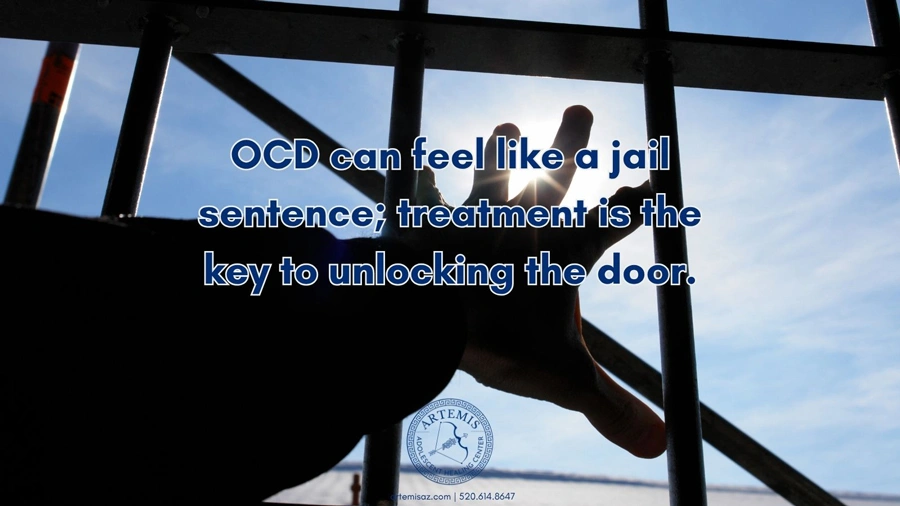
No two people with obsessive-compulsive disorder experience it in precisely the same way. Here are some common symptoms to know:
- Excessive handwashing or cleaning that goes beyond general hygiene
- Checking rituals, including things like turning off the appliances or locking car doors
- Counting, tapping, and repeating actions a certain number of times
- Fearing contamination from harmless surfaces
- Excessive expectations of symmetry or things in a particular order
- Intrusive, obsessive thoughts, which can be disturbing or violent
- Asking family members for constant reassurance that things are okay
- Avoidance of certain people or places that trigger OCD behaviors
- Spending excessive time on routines, sometimes interfering with completing homework, attending school, or sleeping
- Emotional outbursts and irritability
- Discusses the compulsive behaviors
- Physical exhaustion or stress because of managing the rituals
- Grades are falling
- Withdrawing from friends or loved ones in the adolescent’s life
- Loved ones getting drawn into the rituals, such as helping the teen avoid specific triggers
Symptoms vary and deserve discussion with a qualified clinician.
Evaluation considers the pattern and its effect on daily life rather than using a symptom list as a diagnosis.
Are Your Teen’s Routines a Sign of OCD?
Routines or preferences alone do not establish OCD. A clinician considers whether unwanted thoughts or rituals cause distress, take time or interfere with daily life.
Share what your teen describes and what you have noticed. Assessment helps distinguish OCD from other concerns.
Diagnosing OCD: What Family Members Need to Know
A qualified clinician reviews symptoms, history and daily functioning, along with other possible explanations.
You and your teen can bring questions about the evaluation and treatment goals into that conversation.
Adolescent OCD Types That May Appear

Obsessive-compulsive disorder isn’t a ‘one-size-fits-all’ disorder. It encompasses several subtypes, although not all are common in adolescent OCD. Here are some of the types teens might experience:
- Contamination fears
- Checking things
- Symmetry obsessions
- Taboo intrusive thoughts
- Perfectionism
- Moral/religious obsessions
Our compassionate team can help deliver customized treatment plans to help your teen overcome the intense anxiety and disruptive thoughts in a supportive environment. We give our clients all the tools they need to make significant improvements.
Discuss Your Teen’s Care at Artemis
Treatment Approaches in Adolescent OCD Treatment
Exposure and response prevention, or ERP, is a form of CBT used for OCD. The Artemis clinical team provides ERP when clinically indicated. Treatment goals and the approach are discussed as part of the individual plan.
Other confirmed approaches, including CBT, DBT skills or ACT, may address needs identified in assessment. Psychiatric care can be included when indicated; medication choices and follow-up are discussed with the prescriber. NIMH explains OCD treatment.
OCD Care: Understand, Plan and Practice
Understand symptoms
Plan treatment
Connect support
Exposure and Response Prevention (ERP Therapy)
ERP is a form of CBT used for OCD. It involves working with a clinician on feared situations or thoughts while practicing responses that do not reinforce compulsive rituals.

The Artemis clinical team provides ERP when clinically indicated. The approach and treatment goals follow the individual plan.
Acceptance and Commitment Therapy and OCD Recovery
ACT can help a teen notice difficult thoughts and feelings while working toward meaningful goals.
Clinicians select this approach according to the individual treatment plan and explain how it fits alongside other care.
Cognitive Behavior Therapy (CBT)
CBT approaches help teens understand connections among thoughts, emotions and behavior. ERP is a specific CBT approach used for OCD.
The clinician discusses the approach selected and goals for practicing skills in daily life.
Dialectical Behavior Therapy (DBT)
DBT skills can address intense emotions, distress and communication needs identified through assessment.
These skills can support the broader treatment plan. The clinical team determines how they fit alongside OCD-focused care.
Medication Management in OCD Treatment
Psychiatric care can be included when indicated. A prescriber reviews symptoms, health history and current medications when considering options.

Psychiatric visits are delivered by telehealth. Discuss expected benefits, possible side effects and follow-up with the prescriber.
Holistic Treatments for Whole Person Healing
Activities and expressive approaches, including art and music, can be included according to the individual plan.
Clinicians and staff facilitate these activities alongside clinical therapy, connecting them with treatment goals.
Help Caregivers Understand the Plan
Family conversations can help caregivers understand distress, repeated reassurance seeking and the goals being addressed in treatment. Ask the clinical team how to respond in ways that support the agreed plan.
Caregivers who can help the client and family may participate in clinical family sessions in person or by video. Pillars provides a separate source of support open to all caregivers.
OCD and Co-Occurring Mental Health Disorders

OCD sometimes exists alongside another mental health concern. We often see these co-occurring disorders in teens and adult clients:
- Generalized anxiety disorder
- Panic attacks
- Eating disorders
- Major depression
- Substance use disorder
- Mood disorders
We work hard at the beginning of the teen’s OCD treatment to identify these, if any exist. Early diagnosis helps us gain insight to other factors impacting OCD, allowing us to adjust treatment plans to address both components.
Why Specialized Adolescent Services Work Better Than Adult Models
Treatment plans for teens with OCD use different language, coping tools, and pacing than those for adults. Our therapists work closely with teens to build trust and rapport.
We also ensure that the approaches integrate well with a teen’s daily life, including school, part-time jobs, or family life.
Start With an Assessment
An online questionnaire can prompt a conversation, but it does not diagnose OCD or OCPD. A clinical assessment considers symptoms, history and daily functioning. Artemis offers residential treatment in Tucson and Surprise, PHP in Tucson, IOP and individually arranged outpatient care. Teens can begin at the outpatient level when assessment indicates it is appropriate. Compare the levels of care.
Call Admissions 24/7 at (520) 614-8647 to discuss your teen’s needs, the free assessment process and benefits for recommended care.
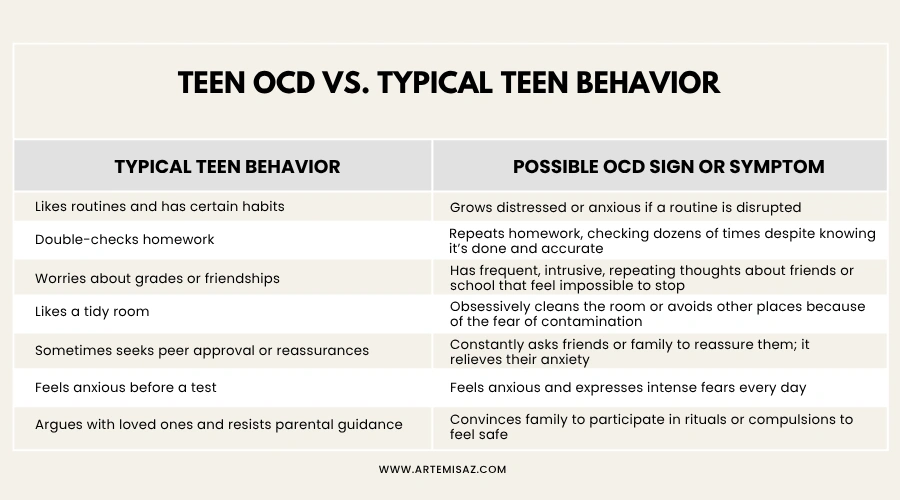
Teen OCD vs. Typical Teen Behavior: When to Worry
Seek an evaluation when unwanted thoughts or rituals are distressing or interfering with daily life. A teen does not need to reach a particular level of disruption before asking for help.
An online questionnaire can prompt a conversation, but it does not diagnose OCD or OCPD. Discuss concerns with a qualified clinician.
Discuss Your Teen’s Care at Artemis
Call Artemis Adolescent Healing Center for OCD Treatment
Share symptoms, current providers and previous care with Admissions. Assessment guides the recommended treatment and setting.
Call Admissions 24/7 at (520) 614-8647 to discuss your teen’s needs, the free assessment process and benefits for recommended care.
Questions About Treatment
Does Artemis provide ERP for OCD?
Yes. The clinical team provides exposure and response prevention when clinically indicated.
Assessment and the individual treatment plan guide how ERP and other supports are used. Your family can discuss treatment goals with the team.
Are OCD and OCPD the same diagnosis?
No. OCD involves obsessions and compulsions. Obsessive-compulsive personality disorder is a separate condition.
A clinician evaluates the overall pattern and daily impact. An online OCD questionnaire does not diagnose either condition.
Related Treatment and Family Resources
Explore these resources alongside the information on this page. Admissions can help connect your questions with treatment options.
treatment programs · residential treatment
References
- Dianne M Hezel, H Blair Simpson. 2019 Jan. Exposure and response prevention for obsessive-compulsive disorder: A review and new directions. Indian Journal of Psychiatry. https://pmc.ncbi.nlm.nih.gov/articles/PMC6343408/