
Supporting Teens in Recovery Through Art Therapy at Artemis
At its core, art therapy is a specialized form of psychotherapy. Rather than relying on verbal expression alone, it incorporates art-making into the treatment process. And for many young people, this leads to breakthroughs that may not be achieved via traditional talk therapy alone.
In art therapy sessions at Artemis Adolescent Healing Center, youth work with a trained therapist who will guide them through specific art therapy exercises to support their recovery. It’s just one of the types of therapy we use. But it is undeniably powerful.
So, what happens in art therapy for teens? What are the benefits of art therapy for teenagers? We’re here to answer your questions.
Find Accredited Teen Treatment Programs at Artemis
What Happens in Art Therapy for Teens?
In art therapy sessions, a licensed art therapist guides teens through specific creative activities. This can be done in a group therapy setting (group art therapy for teens) or in one-on-one sessions (individual therapy).
Depending on the day, a therapist might use diverse art therapy exercises. This keeps things novel. Different art therapy activities may also have specific objectives. For example, giving teens a way to release their emotions or helping them identify how they feel in the first place.
Various art supplies might be used during the creative process. For example, paints, crayons, clay, colored pencils, mixed media, or other materials.
Art Therapy Activities for Teens
What are some examples of art therapy activities for teens? In groups or individual therapy sessions, an art therapist may guide teenagers through exercises such as:
- Creating a visual representation of feelings (e.g., making a painting that uses colors representing how one feels).
- Mask making. For example, making a mask with your “two sides” – the one you show the world vs who you really are internally.
- “Emotion color swatches.” Identify different emotions with color swatches (e.g., red for anger, yellow for happy).
- Drawing or painting a safe space (e.g., the beach). It could be anywhere you feel safe, calm, and tranquil.
- Clay making (crafting various items out of clay, like bowls).
- Making a feelings wheel.
- Color or create mandalas.
- Self-portraits.
- Collages.
These are just some examples. The art therapy techniques, whether used as individual or group activities, can depend on the client’s goals. In other words, what a teen struggles with and what they hope to achieve in treatment.
What are the Benefits of Art Therapy for Adolescents?
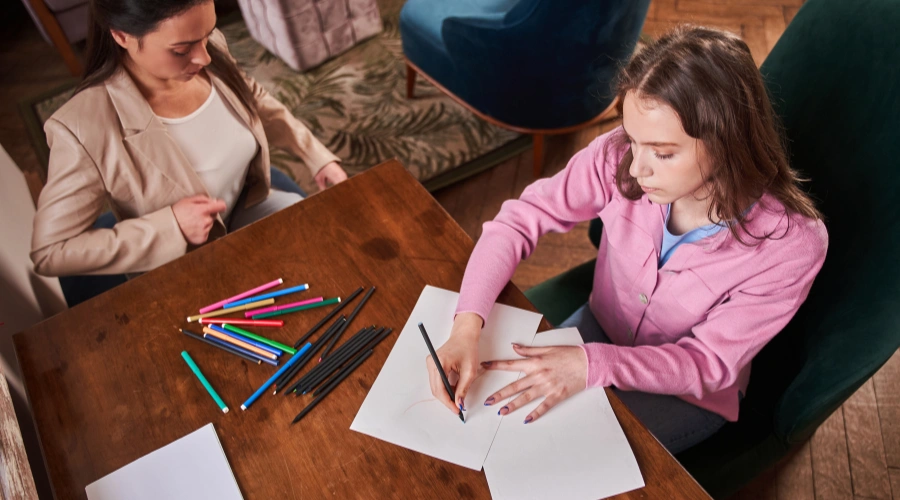
Many teens like art therapy. It’s a non-invasive treatment. These factors alone often put families and their kids at ease. What are some of the specific ways art therapy might help your teen? Here are some of the benefits.
A Break from Traditional Talk Therapy
Part of the appeal of art therapy is that it’s not like traditional therapy, where you sit down and talk. Talk therapy is important. It’s just that art therapy plays a unique role. Working on art projects is less intimidating for many teens. It’s often easier to participate and engage.
With this increased comfort, other parts of treatment, including talk therapy sessions, can become easier. Creative activities also help therapists start conversations with teens. They act as a bridge of sorts, helping clients open up and share what’s on their mind.
Increased Emotional Awareness
Some art therapy activities focus on helping people feel calm or self-soothe. This can be important for emotion regulation. Often, the first step toward regulating emotions, however, is to put a name to how you feel.
Many teens struggle to pinpoint their feelings. They could use unhealthy coping mechanisms, like drugs and alcohol, self-harm, or eating disorder behaviors. They may shut down or get irritable. But, they might not have the words to describe what’s going on inside.
Art therapy activities that focus on helping people identify emotions (like emotional color swatches or making a feelings wheel) give teens the language they need to identify how they feel. This opens the door to being able to take care of one’s emotional needs in a healthy way.
For example, a teen who can identify that they feel angry will be better able to express the need to cool down and take some space. This can prevent constant arguing or outbursts, which they may feel unable to control at the time they enter therapy.
Self Expression and Discovery
Art is a healthy way to express yourself. Many art therapy ideas focus on expression: expressing how you feel or who you are. This can be therapeutic for those who feel misunderstood or who struggle with identity in any way, as just a couple of examples.
When art therapy prompts like making a self-portrait or painting your emotions are used, it can help teens learn more about themselves. They can start to develop a better understanding of how they feel, how they see themselves, and the progress they’d like to make.
Mindfulness and Grounding

Mindfulness is the practice of staying in the present moment. There are a lot of ways to practice mindfulness. Making art is one of them.
For example, if a teen struggles with racing thoughts due to anxiety, it helps shift the focus to the present moment by focusing on the act of creation.
Building Coping Skills
As a whole, creative activities are great coping strategies. Often used for relaxation, they’re a good way to self-soothe.
They can serve as an emotional release when feelings like anger, sadness, or fear become overwhelming. Or, they can serve as a healthy distraction.
Confidence and Self Esteem
Art projects often contain multiple steps. By making art in therapy, teens learn that they are capable. They can complete something successfully.
Art therapy can also be powerful for those who struggle with perfectionism. It emphasizes the benefits of creating, regardless of artistic skill level.
Get Confidential Trauma and PTSD Assessment
What Does Research Say About Art Therapy for Teens?
Extensive research supports the efficacy of art therapy. Research on art therapy for teens shows that it can help with:[1]
- Post-traumatic stress disorder.
- Depression symptoms.
- Anxiety symptoms.
- Distress tolerance.
- Emotion regulation.
- Self expression.
- Confidence.
- Communication.
Teens navigating a wide range of mental health concerns benefit from art therapy.
In addition to conditions like mood, anxiety, and trauma disorders, it’s often a part of treatment for eating disorders and substance use disorders.[2]
What are the Signs of an Effective Art Therapist?

Who will your child work with during art therapy sessions? An art therapist is a credentialed mental health professional. Like other therapists, they are highly trained.
To become an art therapist in Arizona, one must meet certain requirements, including:
- Higher education. Art therapists in Arizona must have a master’s degree. At a minimum, national requirements for professional entry include a master’s degree with 60 semester credits and extensive postgraduate experience under the supervision of credentialed art therapists. This process usually takes at least four years.[3]
- State licensure. To practice, art therapists need to hold a standard mental health license issued by the state of Arizona. This also must be maintained. In other words, if it expires, they cannot practice.
In some cases, art therapists are board-certified (usually, by the Art Therapy Credentials Board (ATCB)). Artemis Adolescent Healing Center runs thorough background checks on everyone we hire. Degrees and certifications are verified. They are available for parents to see.
How Creative Therapies are Used at Artemis
Creative therapies are best used as part of a comprehensive approach. We use treatments like expressive arts therapy and music therapy alongside other evidence-based therapies for mental health and substance abuse.
For example:
- Acceptance and Commitment Therapy for Teens (ACT).
- Dialectical behavior therapy (DBT).
- Cognitive behavioral therapy (CBT).
- Motivational interviewing (MI).
- Psychodynamic therapy.
- Trauma-focused therapy.
- Functional Family therapy.
Art therapy sessions tend to meet once per week. By combining multiple types of therapy, we help teenagers and adolescents gain a thorough set of skills that set them up for success. Every client at Artemis Adolescent Healing Center gets an individualized treatment plan.
How Long Does Art Therapy Last for Teens at Artemis?

The full course of art therapy might last for weeks or months. It depends on various factors, such as client progress and symptom severity. Or, if art therapy is part of a comprehensive adolescent treatment program like those at Artemis, it will be integrated as a component of both inpatient and outpatient support.
Artemis offers both residential programs and outpatient programs for teens and adolescents. How long these programs last depends on the needs of the client.
Many Forms of Insurance Accepted
Choose Artemis and Find Effective Support for Your Child Today
Artemis Adolescent Healing Center is a JCAHO-accredited mental health, substance abuse, and dual-diagnosis treatment center for teens. We are located in Tucson. However, we are proud to serve teens and families living in a wide range of areas in Arizona and nationwide.
Our comprehensive treatment programs are covered by many forms of insurance. This makes it possible for teens to access the effective, holistic care they need. Parents are closely involved in the treatment process.
Whether you want to learn more about art therapy for teens in Arizona, verify your teen’s insurance benefits, or start the intake process, we’re here to help. Call our confidential admissions line today.
References
- Versitano, S., Tesson, S., Lee, C.-W., Linnell, S., & Perkes, I. (2025, October). Art therapy with children and adolescents experiencing acute or severe mental health conditions: A systematic review. The Australian and New Zealand journal of psychiatry. https://pmc.ncbi.nlm.nih.gov/articles/PMC12460915/
- Quinn, P. (2025, January 6). Art therapy’s engagement of brain networks for enduring recovery from addiction. Frontiers in psychiatry. https://pmc.ncbi.nlm.nih.gov/articles/PMC11743619/
- Arizona legislature. Arizona Legislature. (n.d.). https://www.azleg.gov/