
Treatment Options for Teens With Antisocial Personality Disorder
Antisocial personality disorder (ASPD) usually develops in childhood or early adolescence, and signs are typically present by age 15. Catching these signs as early as possible is ideal.
This is especially true, as many adults with the condition don’t pursue a diagnosis on their own.
A lack of diagnosis and treatment means symptoms and their effects may continue to worsen over time. If you suspect that your teen has or could have an antisocial personality disorder, looking for information about ASPD and treatment is often a vital first step.
What should you know about antisocial personality disorder in teens? It’s diagnosed as conduct disorder first. Getting help as soon as possible matters and can prevent future challenges associated with antisocial behavior.
Artemis Adolescent Healing Center treats ASPD and related concerns in teens. With Master’s and PhD-level providers on staff, we are a Joint Commission-accredited treatment center that provides ethical and effective care for adolescents in Arizona and nationwide.
Get Accredited Treatment Programs at Artemis
Understanding Antisocial Personality Disorder in Teens
ASPD is characterized by long-standing, pervasive patterns of antisocial behavior. Antisocial behavior can refer to a range of acts: violence toward people and animals, property destruction, theft, deceitfulness, and serious rule violations.
Though it isn’t usually diagnosed until age 18, symptoms start sooner. That is when parents should seek help.
For those under 18, the initial diagnosis is conduct disorder.[1] If patterns continue after age 18, the diagnosis is then changed to ASPD. Children with conduct disorder may show signs like:
- Bullying others.
- Lying, stealing, or ignoring rules.
Animal cruelty and setting fires are two major warning signs of ASPD in youth. These signs should never be ignored.
Does Treatment for ASPD in Teens Work?
Yes. There are effective treatments for antisocial behavior in teens. In fact, getting your teen help when they’re young is one of the best things you can do.
Effective treatment programs like our offerings at Artemis can help teens avoid new or worsened consequences of untreated ASPD symptoms.
The Importance of Early Treatment for ASPD and Conduct Disorder

Early intervention for antisocial traits aims to reduce future challenges of untreated antisocial personality disorder. Treatment promotes positive outcomes like:
- A reduced risk of psychopathy in adulthood.
- A decreased likelihood of criminal behavior.
- Better educational and employment outcomes.
For children with conduct problems, treatment can prevent full-blown personality disorders like ASPD.
What are Treatment Approaches for Antisocial Personality Disorder in Teens and Adolescents?
Artemis Adolescent Healing Center uses evidence-based treatments for treating antisocial behavior and conduct disorder in teens. Approaches used to address antisocial personality disorder often include:
Cognitive Behavioral Therapy
Cognitive behavioral therapy (CBT) helps teens learn to get their needs met without turning to harmful or violent behavior. A goal-oriented psychotherapy, CBT for ASPD helps teens:
- Understand the impact of their actions on others.
- Change negative thought patterns that justify harmful or impulsive behaviors.
- Improve impulse control.
- Manage anger.
These are just some examples of CBT goals for ASPD.
Dialectical Behavior Therapy
Dialectical behavior therapy (DBT) helps people who struggle with intense emotions and emotional dysregulation. DBT helps people increase emotional recognition, reduce impulsivity, interact with others more effectively, and find healthier coping mechanisms.
Mentalization Based Treatment
Mentalization-based treatment (MBT) can help teens think before reacting to intense emotions or misinterpreted social cues. It focuses on the question “What’s on my mind and the minds of others?”
MBT helps people:
- Understand their own or others’ mental states.
- Reduce impulsivity.
- Regulate emotions.
There’s a specific adaptation of MBT tailored to ASPD called MBT for ASPD (MBT-ASPD). MBT ASPD focuses on the mental and relational aspects of the personality disorder.[2]
Parent Management Training for ASPD

Parent management training (PMT) can be important for parents of youth affected by conduct disorder or antisocial behavior.
Parents may work with mental health professionals using PMT or related approaches on things like:
- Setting clear, consistent limits. Parent training helps parents set and follow through with boundaries and consequences for antisocial behavior.
- Building a structured environment. Creating and following routines.
- Enhancing parent-child interaction. Promoting healthy relationships between parents and children, reducing harsh punishment.
Giving parents the tools they need to help their kids at home is more effective than treating the child alone. It’s important that you’re empowered and know what to do. Helping youth with antisocial behavior is a long-term process that requires consistency.
Medication Management and Psychiatry
In some instances, medication can be used as an add-on to therapy for ASPD. It may be a critical part of treatment for teens with some co-occurring disorders. Medication can also be used to reduce symptoms like irritability, impulsivity, mood swings, and aggression.
Depending on their symptoms, people with ASPD can benefit from:
- Mood stabilizers.
- Antidepressants.
- Antipsychotics.
Not all youth with ASPD require pharmacological interventions or medication of any kind. It’s case-dependent.
When clients in our programs take medication, our psychiatrists provide close monitoring. Prescribers may change medications as needed. For example, if a child has adverse effects or doesn’t respond to the first kind of medication they try.
Family Therapy Sessions
Family members often play an essential role in treatment for youth. Family therapy sessions involve attending therapy together as a unit. This can include extended or immediate family members and other close loved ones.
A family therapist can help your family:
- Communicate better.
- Address behavioral issues.
- Improve family dynamics.
Youth in our programs participate in a combination of group therapy, individual therapy, and family therapy sessions. Each has its own unique benefits.
How Common and Dual Diagnoses for Teens with ASPD? Addressing Comorbidities in Adolescent ASPD

Teenagers with antisocial personality disorder almost always have other health conditions. Commonly, these include:
- Substance use disorders.
- Post-traumatic stress disorder.
- Mood disorders.
- Other personality disorders.
- Anxiety disorders.
Artemis treats ASPD and co-occurring disorders. Addressing other mental health conditions alongside ASPD helps our clients achieve better treatment outcomes. It promotes whole-person well-being and quality of life.
How is ASPD Diagnosed? Antisocial Personality Disorder Symptoms
Antisocial personality disorder is diagnosed using the criteria in the Diagnostic and Statistical Manual of Mental Disorders (DSM). To be diagnosed with ASPD, people must have at least three of the following symptoms, occurring since age 15, among other criteria.[3]
- Failure to follow laws or social norms (repeatedly breaking laws).
- Deceitfulness (repeated lying or manipulating/conning other people for personal gain).
- Lack of remorse (not feeling bad for hurting, stealing from, or mistreating others).
- Consistent irresponsibility (e.g., failure to sustain consistent work behavior).
- Irritability and aggressiveness (repeated physical fights or assaults).
- Impulsivity or failure to plan ahead.
- Reckless disregard for the safety of others.
ASPD looks different from person to person. Teens with ASPD may tend toward some behaviors more than others.
Get Confidential Trauma and PTSD Assessment
If Your Teen Does Not Have ASPD: What Are The Other Possibilities?
Some signs of ASPD can resemble those seen in other conditions.[4] Ruling out other possible causes of symptoms is an important part of the diagnostic process.
Differential diagnoses can include, but aren’t necessarily limited to:
- Borderline personality disorder.
- Substance use disorders.
- Isolated acts of misbehavior.
- Narcissistic personality disorder.
- Mood disorders (e.g., bipolar disorder).
- Intermittent explosive disorder.
- Cerebrovascular accidents.
- Temporal lobe epilepsy.
- Psychotic disorders.
- Brain tumor.
Isolated acts don’t lead to a diagnosis of ASPD. The longstanding nature of harmful behaviors is what leads to an eventual diagnosis: that’s why providers look for ongoing patterns starting in early life, but can’t diagnose it until the child is older.
Inpatient and Outpatient Treatment for Youth With ASPD at Artemis Adolescent Healing Center

Artemis Adolescent Healing Center provides inpatient and outpatient treatment for mental health and substance abuse. Youth at our center get individualized care plans. Loved ones are highly involved in the treatment process.
Residential Inpatient Treatment for ASPD at Artemis
Residential inpatient treatment is typically recommended for teens and adolescents with more severe symptoms. It provides 24/7 supervision and the most intensive amount of therapy. Youth in inpatient treatment stay on-site at our center for the duration of their program.
Residential treatment clients at Artemis benefit from:
- A comfortable, home-like environment.
- Nutritious, fresh meals.
- Activities like exercise and yoga.
- Upscale amenities, such as a pool and basketball court.
- Visitation (parents are allowed to see their kids).
An inpatient program for ASPD may last for around 30-60 days. This largely depends on your child’s needs and factors like insurance coverage. Aftercare planning helps teens and families set themselves up for success as inpatient care ends.
Outpatient ASPD Treatment Programs at Artemis
Some teens at Artemis can start their treatment journey in outpatient treatment. Others transition into outpatient programming after completing inpatient treatment. We offer multiple levels of outpatient care. These include:
- Partial hospitalization programs (PHP)
- Intensive outpatient programs.
- Outpatient programs and aftercare.
Our outpatient programs have flexible treatment lengths. These are a great fit for teens in the Tucson area who need and are ready to balance responsibilities like school or work with therapy.
Frequent Challenges Affecting Teens with ASPD and How We Help
Teens with antisocial traits and their families often encounter a number of challenges. Treatment can help address them. For example:
- Low motivation for change. Motivational techniques can be used to address barriers like a lack of desire to reduce antisocial traits. These focus on helping people find internal motivation to change.
- Lack of remorse, frequent lying, and rule-breaking. Therapy to address low empathy is paired with clear boundaries and consequences for harmful actions.
- Poor impulse control. Therapies like CBT, DBT, and MBT for ASPD support impulse control.
- Legal problems and problems at school. Effective treatment of ASPD can reduce criminal behavior. The treatment process can include helping kids get back on track with their education or setting education and work-related goals.
Every teen and family is different. Since care at Artemis is highly individualized, we help people meet their own unique goals.
Support for Family Members of Teens With ASPD
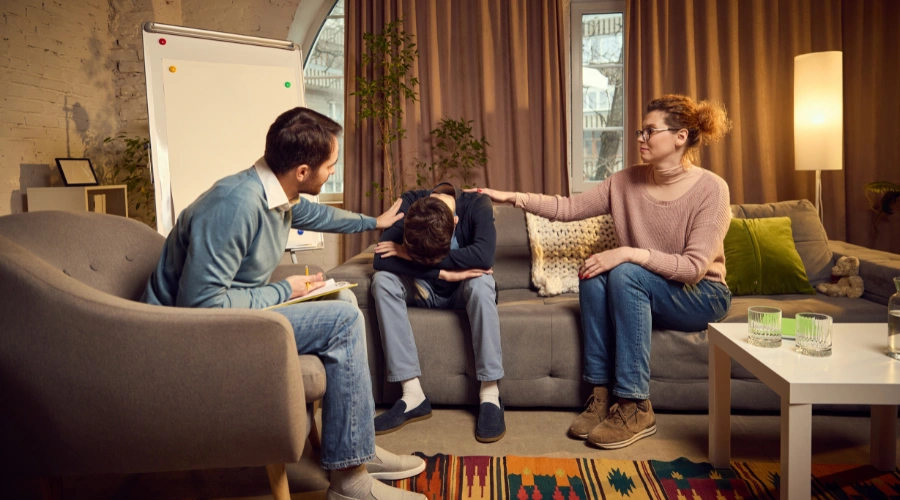
Treatment is imperative for teens who show signs and symptoms consistent with antisocial personality disorder. Family members of those with the mental health condition may also need professional support.
For example, siblings of a young person with ASPD may have been affected by issues like violent or aggressive behavior. Emotional strain and fear can be common. It’s important for them to have a private, safe space to talk.
Parents, too, can benefit from individual therapy. Getting therapy can help you take care of your own emotional well-being when supporting youth with mental health issues.
Many Forms of Insurance Accepted
What Causes ASPD in Teens?
We don’t know the singular cause of ASPD. But some factors make it more likely that a person will develop antisocial personality disorder. There are also factors that can make it worse.
- Abuse. Childhood abuse or neglect is a significant risk factor for ASPD. Although not everyone with ASPD has been abused, it often contributes to the development of the condition.
- Family history. People with antisocial parents or parents who abuse alcohol face an increased risk of ASPD.[5]
- Environment. Environmental factors, such as growing up in an unstable home and inconsistent or harsh parenting practices, increase the likelihood of developing ASPD.
- Social influence. Teens displaying antisocial behavior may be more drawn to similar qualities in others. This may influence behaviors.
- Brain differences. Research shows that there are brain differences in people with ASPD. These differences correlate with poor impulse control, decision-making, and callous behavior.
- Gender. ASPD can occur in people of any gender. However, it’s more common in men than it is in women.
How common is ASPD? It’s estimated that ASPD has a lifetime prevalence of around 1-4% in the general population.[6]
Contact Artemis Today for Teen Antisocial Personality Disorder Treatment Options

Artemis Adolescent Healing Center is a trusted, JCHAO-accredited mental health, dual-diagnosis, and addiction treatment center for teens and adolescents. We are proud to treat ASPD and common co-occurring concerns in teens.
Located in a peaceful area in the Sonoran Desert, our facility provides a safe and supportive healing environment. Our programs are covered by insurance, making the highest quality of care accessible for youth and their families.
Call our confidential admissions line to learn more about ASPD treatment for teens at our center. We’re here to verify your teen’s insurance benefits or start the intake process today.
Emergency Resources for Youth and Families (Nationwide and Local)
Artemis is not a crisis center. If you or your child needs to talk to someone now, here are some resources that can help.
YouthLine (Nationwide)
- Peer support for teens and young adults up to age 24.
- Call 877-968-8491.
- Text “teen2teen” to 839863.
Suicide & Crisis Lifeline (Nationwide)
- All ages.
- Call or text 988.
- Crisis Text Line (Nationwide)
- Text “HOME” to 741741
Arizona Statewide Crisis Lifeline (Arizona)
- Call 1-844-534-HOPE (4673)
- Text 4HOPE (44673)
Teen Lifeline (Arizona)
- Call or text 602-248-8336.
Connections Tucson Crisis Response Center (Tucson)
- 2802 E District Street
- Tucson, AZ 85714
Open 24/7/365, the center offers resources for teens and adults, including:
- Walk in mental health urgent care.
- Stabilization units.
- Post-acute services.
The Trevor Project (Nationwide)
- LGBTQ+ youth up to age 24.
- Call 1-866-488-7386.
- Text “start” to 678-678.
References
- Antisocial personality disorder: Beyond keeping to yourself. Cleveland Clinic. (2025b, September 17). https://my.clevelandclinic.org/health/diseases/9657-antisocial-personality-disorder#management-and-treatment
- AW; B. (n.d.). Mentalizing and group psychotherapy: A novel treatment for antisocial personality disorder. American journal of psychotherapy. https://pubmed.ncbi.nlm.nih.gov/34915724/
- Antisocial personality disorder: Often overlooked and untreated. Psychiatry.org – Antisocial Personality Disorder: Often Overlooked and Untreated. (2022a, December 29). https://www.psychiatry.org/News-room/APA-Blogs/Antisocial-Personality-Disorder-Often-Overlooked
- Fisher, K. A. (2024, February 29). Antisocial personality disorder. StatPearls [Internet]. https://www.ncbi.nlm.nih.gov/books/NBK546673/
- What is antisocial personality disorder?. SAMHSA. (2025, December 23). https://www.samhsa.gov/mental-health/what-is-mental-health/conditions/antisocial-personality-disorder
- Werner, K. B., Few, L. R., & Bucholz, K. K. (2015, April). Epidemiology, comorbidity, and behavioral genetics of antisocial personality disorder and psychopathy. Psychiatric annals. https://pmc.ncbi.nlm.nih.gov/articles/PMC4649950/