

Artemis treats teens ages 12–17 with mental health, substance use and co-occurring concerns. Assessment guides residential treatment, PHP, IOP or outpatient care; a typical residential stay is 60–90 days.
Residential homes are in Tucson and Surprise. Families participate in care planning, with school coordination and continuing support built into the process. Call Admissions 24/7 to discuss the next step.
Clinically Reviewed By

Mabel Tobah is a Board-Certified Psychiatric Mental Health Nurse Practitioner (PMHNP-BC) with a Master of Science in Nursing from Walden University, who has a strong passion for providing patient-centered care.
Accreditations & Licensing
 Maiden Voyage LLC · 6599 N Oracle Rd, Suite B, Tucson · PHP and IOP site record
 Maiden Voyage LLC · Tucson · Adolescent residential site record
Read our Privacy Policy to learn how information may be used or disclosed and how to contact us about privacy.
Admissions
Call Admissions 24/7
Find Answers on Treatment for Teens from the Experts at Artemis
Artemis treats adolescents ages 12–17 with mental health concerns, substance use concerns or both. You can contact Admissions before you know which level of care to request.
Assessment guides residential treatment, PHP, IOP or outpatient care. Residential homes are in Tucson and Surprise; day and outpatient services are based at Oracle in Tucson with telehealth available to Arizona residents.
Get Accredited Adolescent Treatment Programs at Artemis
Essential Takeaways
Artemis treats adolescents ages 12–17. Assessment guides the starting level of care, with residential homes in Tucson and Surprise and day/outpatient options based in Tucson.
Family participation, school coordination and continuing-care planning connect treatment with everyday life. You can call Admissions before choosing a program.
What is a Teen Rehab Program and When Is It Needed?

Teen treatment brings together support for mental health, substance use and co-occurring concerns. At Artemis, assessment considers what has changed for the teen, safety needs and the support available at home.
Changes in mood, school participation, relationships, sleep or substance use are reasons to seek professional guidance when they affect daily life. You do not need to wait for a crisis before asking for help.
How Does Teen Rehab Work? A Step-by-Step Overview
Admissions starts by discussing your teen’s concerns and the information needed for pre-screening. Clinical review helps determine whether the program and level of care fit the teen’s current needs.
Artemis provides behavioral health residential treatment rather than hospital inpatient care or onsite detox. Teens who need withdrawal management complete it first with a partner, with referral coordination from the team. Admissions also reviews benefits, costs, consent paperwork and arrival planning with your family.
Residential Treatment vs Outpatient Care: Which Is Right for My Teen?
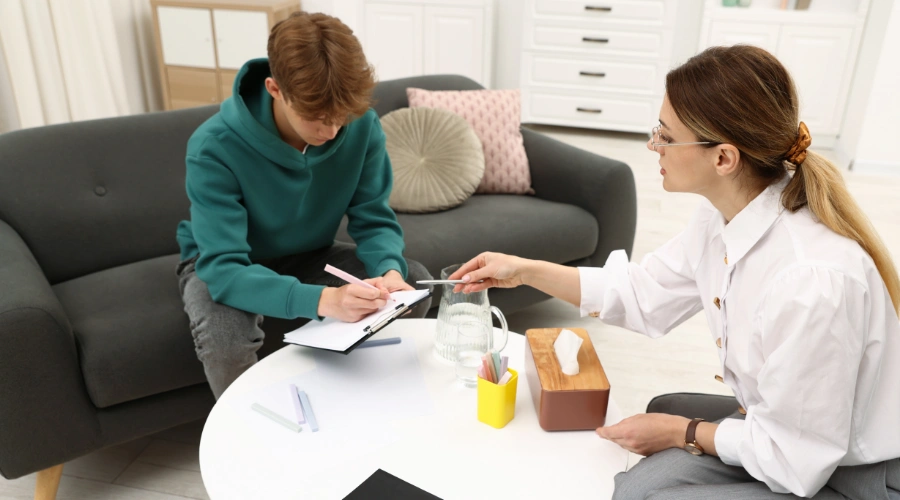
Residential treatment typically lasts 60–90 days and includes three hours of Ombudsman virtual school each weekday. Ombudsman issues credits, and the Family Advocate coordinates with the home school.
PHP runs Monday–Friday, 9 am–3:30 pm, typically for about four weeks, with schoolwork outside program hours. IOP program hours are Monday–Friday, 4–7 pm, with a typical course of four to eight weeks. OP appointments are arranged individually, typically over about three months.
These are typical courses, not a required sequence. Teens can begin at OP when assessment indicates it is appropriate. Compare the programs for more detail.
Treatment, School and Home
Residential
PHP
IOP
OP
What Does a Teen’s Day Look Like in Residential Treatment?

Weekdays balance education, therapy, activities, meals and time to practice everyday skills. Individual therapy is scheduled twice weekly for 50–60 minutes, and family therapy is weekly. Awake staff support the homes overnight.
Teens use supervised facility-owned devices for education. Personal phones are not allowed; approved contacts use the house phone during the weekday afternoon call block. Weekly virtual visits and scheduled in-person visits keep families involved. Weekends are family reset weekends without family phone calls.
In-person visits are arranged at Oracle in Tucson, at the Surprise intake office or offsite with staff supervision and transport. Visits do not take place at the Tucson residential homes.
How Are Mental Health and Co-Occurring Disorders Treated in Teen Rehab?
Assessment brings together mental health symptoms, substance use, safety, previous treatment and family and school needs. The team uses those findings to build and review the individual plan.
Therapy, family work and psychiatric care when indicated are connected to those goals. Psychiatric visits are provided by telehealth.
How Are Families Involved in Teen Rehab?

Your teen and guardian participate in treatment planning. Residential care includes weekly family therapy and clinical updates. Pillars is open to all caregivers, with separated-guardian scheduling arranged case by case. Family work in other levels follows the individual plan.
Parents can choose outreach follow-up after any level of care: weekly for eight weeks, every two weeks through day 90, then monthly through month 12. An Artemis outreach representative typically calls; parents can choose text or email. Continuing treatment, medication follow-up and school needs are also part of discharge planning.
Caregivers can participate in family therapy when it is helpful for the client and family. Sessions can take place in person or by video/telehealth.
Clinical family work follows the treatment plan. Pillars remains open to all caregivers, with separated-guardian scheduling arranged case by case.
What Happens After Rehab? Ongoing Support and Relapse Prevention

Discharge planning connects the teen with continuing treatment, medication follow-up when needed, school needs and support at home. The next level of care follows current needs and progress rather than a fixed sequence.
Families can discuss communication, routines and coping skills with the team as they prepare for the transition. Parents can choose ongoing outreach contact after every level of care.
Practical Questions Parents Often Ask About Teen Rehab
A parent or guardian with legal decision-making authority signs the consent packet. If parents are separated, Admissions asks for the custody order. Consents are completed in advance when a parent, Artemis escort or family-arranged transport company brings the teen.
Admission timing depends on clinical review, medical needs, paperwork and benefits arrangements. Admissions can explain the next steps and current availability with the team.
If a client will turn 18 during the expected stay, transition planning begins at intake. Clients transfer to an appropriate placement on their 18th birthday, with arrangements coordinated by the team.
Reach Out to Artemis Today for More Info and Support Options

Artemis clinicians work under clinical supervision, with psychiatric care provided by telehealth. The Family Advocate helps with school, family and outside-appointment coordination. Your family can discuss practical needs with the team throughout planning.
Call Admissions 24/7 at (520) 614-8647 to talk about treatment, confirm benefits and discuss estimated costs. Self-pay families receive a written Good Faith Estimate. The cost guide explains questions to ask before admission.
Explore Accredited Teen Treatment at Artemis
Further Resources from Artemis Adolescent Healing Center for Parents
Artemis is proud to offer a range of unique resources for parents, both curated and collected from across the internet and government sources, as well as informed by our expert clinical team.
Among the latest articles offered are the following, with new additions published each month.
- How to talk to your teen about drinking
- Recognizing red flags in teenage behavior
- How to talk to your teen about cutting
- Considerations for transporting your child to residential treatment
- Parenting tips for teens in rehab
We also have the following local and statewide resources prepared and reviewed.
- The teen mental health crisis in Arizona
- The 2026 Arizona Youth Survey with insights for parents
- Counterfeit pills and fentanyl safety resources for schools and families
- Accessing mental health help in Arizona schools
More FAQs and Additional Questions About Teen Rehab
Can my teen refuse treatment if they are under 18?
Admissions reviews the required consent packet with the family. A parent or guardian with legal decision-making authority signs, and separated parents are asked for the custody order.
Discuss your teen’s circumstances and questions with Admissions so the required paperwork and clinical review can be planned.
What Should We Ask About Sharing Treatment Information?
During admission planning, ask which consents and releases your family will review and how communication with the school and outside providers will be arranged. Bring custody or legal decision-making documents that are relevant to your teen’s care.
The Family Advocate helps coordinate school communication. Your treatment team can explain what information is needed for that planning and discuss your family’s questions about sharing information.
How do I talk to my younger children about their sibling going to rehab?
Use age-appropriate, honest explanations that avoid graphic details but acknowledge their sibling is getting help for serious health problems.
Reassure siblings that the situation is not their fault and that feeling sad, angry, or confused is normal. Consider offering siblings their own support through counseling or family support groups for families affected by addiction.
What if my teen has already been to treatment and relapsed?
Relapse is common and can happen even after high-quality care, especially during stressful transitions like returning to school or changing social circles.
Contact a trusted clinician to reassess current risks, adjust the personalized treatment plan, and consider a higher level of care if needed. Focus on safety first – especially overdose risk with substances like fentanyl – and never frame relapse as a personal failing.
How quickly can my teen start treatment after I call?
Admissions can explain the current next steps, including clinical review, medical needs, paperwork and benefits arrangements.
Both pre-screening and clinical assessment are free. Call (520) 614-8647 to discuss your teen and current availability, with the team.
When to Seek Emergency Help
Artemis does not provide emergency medical care through this website. If a teen may be in immediate danger, has attempted suicide, is unresponsive, has trouble breathing, may have overdosed, or is experiencing a seizure or other life-threatening symptoms, call 911 or go to the nearest emergency department.
For suicide or emotional-crisis support in the United States, call or text the 988 Suicide & Crisis Lifeline. Do not use this page or an online form for an emergency.
Related Treatment and Family Resources
Explore these related resources alongside the information on this page. Admissions can help connect your questions with treatment options.
addiction treatment · mental health care · inpatient · outpatient · IOP · PHP · self-harm · suicidal ideation · Individual therapy · Families participating in therapy · 12-Step programs · The clinical team
References
- Pima Health Data Portal. Teens who Use Alcohol: Pima County. https://www.pimahealthdataportal.org/indicators/index/view?indicatorId=450&localeId=158&localeTypeId=2&periodId=4589
- Lifetime Prevalence of Mental Disorders in US Adolescents: Results from the National Comorbidity Study-Adolescent Supplement (NCS-A). https://pmc.ncbi.nlm.nih.gov/articles/2946114/
- Tanner-Smith, E. E., Wilson, S. J., & Lipsey, M. W. (2013). The comparative effectiveness of outpatient treatment for adolescent substance abuse: A meta-analysis. Journal of Substance Abuse Treatment, 44, 145–158. https://pmc.ncbi.nlm.nih.gov/articles/PMC3477300/
- Arizona State Legislature. A.R.S. § 44-133.01: Capacity of minor to consent to treatment for use of a dangerous drug or narcotic. https://www.azleg.gov/ars/44/00133-01.htm